Blog

He Doesn’t Hit You But…

*tw: emotional abuse*

EDIT: The image for this post features a man of color and a white woman.  This image in no way indicates a correlation between abuse and race.  The featured image was chosen for other reasons by the author and should not be taken to imply that men of color are more likely to abuse their partners.

Several years ago, a popular hashtag cropped up that provided a space for people who had endured abusive relationships to share about their experiences.  Survivors of emotional and verbal abuse, primarily women, took to Twitter to increase visibility for the types of abuse they had endured.  “#HeDoesntHitYouBut his words create bruises just as punches would.”  “#HeDoesntHitYouBut treats you like property.”  “#HeDoesntHitYouBut he uses breaking up with you as a constant threat.”

At the time, I didn’t say much about it, but I sat back and watched friends and strangers validate my own experiences.  It was through this hashtag that I realized the truth of things I had experienced.

In the beginning, he was charming.  I was young and still figuring out who I was.  I was blown away by the fact that a boy I had just met was interested in me.  I was pretty dorky in high school and was still growing accustomed to the fact that men might pay attention to me.  I was naive and had unrealistic expectations of what romance should look like.  We fell in love over a summer, and it wasn’t until we entered our first few months of long distance that things started to shift.

I would call him and he wouldn’t answer.  While I knew I couldn’t expect him to be available every time I called, I would sometimes go three or four days without a call or text from him.  I would start to get worried and would contact one of his friends or roommates in a desperate attempt to make sure he was okay.  They were never very helpful, and eventually he would reach back out to me.  He would give some sort of flimsy excuse about why he had been off the grid, and I would blindly accept his explanation.  I wanted him to think I was “chill” and not clingy, and grilling him on where he had been seemed like a definitive way to drive him away.  He would disappear like this intermittently during our first year of long distance.  Eventually, it stopped.  Even after years of being with him, though, I never got a clear answer on his disappearances.

His flightiness was only the beginning.  Eventually, he tried to control what I wore and who I spent time with.  I wasn’t allowed to wear leggings or yoga pants outside my house because other men might look at me.  If he saw a picture of me in work out pants on Facebook, he would call me and question me about whether I had worn them outside the house and why.  I wasn’t allowed to wear too much make up.  Sometimes, I wasn’t allowed to wear any make up.  I initially thought this was romantic.  I thought it was evidence that he thought I was naturally beautiful, and maybe that was true, but controlling what I put on my body was not the proper way to show me.

Arguing with him was impossible.  Sometimes I would bring up things that were bothering me about him or about our relationship.  He would always claim I was making it up or exaggerating.  He would say I was attacking him and turn my concern back onto me, claiming I was the one who was flawed.  We would never resolve the initial things I brought up and I would leave the conversation feeling like a terrible girlfriend.  There were times when these arguments would get heated.  I’m not an aggressive or angry person.  I very rarely yell or snap at people, but with him, I did.  Often over the phone, we would yell and I would hang up with him and throw my phone across the room in exasperation.

Things continued to worsen when I moved to a different city.  I made new friends that he had never met and that concerned him.  Any time I claimed to be alone studying with a male friend, he would be noticeably suspicious or even blatantly angry.  I wanted to spend time with the new friends I was making, but if I told him I wanted to get together with friends instead of visiting him, he would always get angry or at least annoyed.

Perhaps the most disturbing part of this relationship was that he cut me off from my family.  My parents never liked him, which, obviously, as an 18 year old, made me even more defiant.  However, he gradually convinced me that my parents weren’t the people I thought they were.  By the end of the relationship there was a noticeable distance between my parents and myself.  He had convinced me, over a period of years, to be completely on his side, mistrusting my family.  He manipulated me into believing that he knew what was best for me better than my parents did, so I trusted the things that he told me about them.  It was a vicious cycle.

He was never physically violent with me, and I’m grateful for that.  There were times when I worried about it, especially when he got angry.  Still, I know that plenty of people experience violence and abuse in relationships much more severe that what I catalog here.  But if you’ve experienced this sort of gaslighting and manipulation, I want you to know that you’re not alone.  If you are reading this and wondering about the state of your own relationship, don’t hesitate to reach out to me or someone you trust.  Because this isn’t just about me.  It’s about equipping others to leave unhealthy relationships, and healing in the aftermath. It’s about recognizing the signs before it’s too late. It’s about teaching (not exclusively but especially) our men deeper empathy and compassion.  Even the strongest among us can be emotionally abused, and the first step toward stopping it is realizing that it’s happening.

why did you stay?

why did you stay?

He grabbed
my waist
and told me
he liked my lip ring,
and then kissed it.

I said,
“no, please,
just come lay with me.”
I wore a white comforter,
and we held hands
on the couch
at 6:30
on a Sunday morning.

A train when by
the window
and he ordered me
around the bedroom
in a way that
I mistook for
romance.

He left
granola out on the table
for me,
and honey.
“You’ve overcome
so much,”
he said.

He held
me in his lap
and I touched
his sweaty neck
while he exhaled
and told me his secrets.

He told me
my writing
reminded him of
a certain British philosopher.

I misunderstood,
“I know we
should
let this go, but I
still
want to kiss
you.”

I saw a
pink hair tie
on his nightstand
but
excused it for
a rubberband.

The man before him
told me that I couldn’t
wear tight pants
or make up
because other men
would look at me,
so this kind of violence
seemed more romantic.

I am used to
lies,
and his, at least, came with
honey on his hands when
he held me down,
sticky sweetness on his lips when
he said,

“No wonder this is so hard for you.”

We Need Holy Saturday

Good Friday makes us uncomfortable.  The blood and the gore of the crucifixion makes us sick.  The guilt that all of this had to happen because of our own terrible actions in this world is almost too much.  And it is for these reasons that we must sit in this space known as Good Friday and Holy Saturday.

Most of us skip straight on through from Palm Sunday to Easter morning.  Those are the fun parts, the happy parts.  We listen to children sing and wave branches and sing Hallelujah.  But these two bookends of Holy Week mean significantly less without what happens in between.  If we consider the rest of Holy Week, Palm Sunday suddenly becomes a little more bittersweet.  While the people rejoice and make a beautiful gesture to Christ by laying down coats and branches, one that had been done before in their history to greet kings, Jesus knew what was coming.  He knew that because of these actions, he was seen as a threat to be exterminated by the Roman government.  He likely knew he was in danger by entering Jerusalem.  He knew the time was coming.  Yet, the people rejoiced and exalted him.

When Thursday comes, we remember the power of Eucharist.  These were the final moments of peace Jesus would have before the excruciating events leading up to his death.  For his disciples, it may have been just another Passover at first.  But then Jesus did some strange things.  He washed their feet.  He told them the bread was more than bread and the wine more than wine.  He tried his best to get the message through to them in these last moments they had together.  Not only was Maundy Thursday the last moments Jesus spent with those who loved him before his death, but it’s also Jesus’ final demonstration of what this whole thing has really been about.  He shows them humility.  He tells them that his body is a sacrifice.  He models the vulnerability of ministry.  And they still don’t quite get it.  But they will.

Then Friday comes.  So many of us don’t participate in Good Friday, especially compared to the droves of people who show up on Sunday.  Maybe it’s because we’re too busy or because we don’t see the point.  But there is no Easter without this terrible day.  If we cannot force ourselves to sit in the sadness and the pain of Friday, what good is Sunday?  If Christ is not dead, how can we celebrate him being alive?  We have to allow ourselves to experience the death to experience the resurrection.  In my tradition, we strip the sanctuary.  We read the painful Passion story and watch as candles get blown out and the adornments of the sanctuary are removed.  The crosses are hidden by black cloth.  There is nothing to celebrate.  Jesus is dead.  All is lost. It is painful.  I feel the weight of it in my chest.  Now, of course, we know what is coming.  But the disciples didn’t know.  They thought it was over.  When Christ declared, “it is finished,” it really was finished for them.  This man they had followed and given their lives to, who had shown them the face of God, was gone.  There is no victory in this day.  There is no hope.

Yesterday, on Good Friday, as I left the sanctuary of my church in silence, I was struck by the silence of all those around me.  We left the sanctuary without a sound and carried the reverence through the hallways of the church, only daring to speak once we had entered the parking lot.  The holiness of the pain and suffering we held space for was staggering.  The weight of Good Friday sunk in during these moments.  I was grateful to worship a God who understand my pain.

Today is Holy Saturday, perhaps my favorite liturgical day of the year.  That may seem like a strange statement, but the waiting of Holy Saturday sits true in my life.  In Saturday, there is tension.  Saturday is the day when the disciples began to process what had happened.  The tragedy was over.  The body was buried.  It was a day of sitting around and wondering, “what do we do now?”  It is a day of sitting in darkness.  In the words of Thomas Merton, “when the time comes to enter the darkness in which we are naked and helpless and alone; in which we see the insufficiency of our greatest strength and the hollowness of our strongest virtues; in which we have nothing of our own to rely on, and nothing in our nature to support us, and nothing in the world to guide us or give us light – then we find out whether or not we live by faith.”  It’s in the hours of Holy Saturday that we realize our weakness.  Human power cannot bring Christ back from the grave.  No amount of wailing or pleading done by the disciples could resurrect him.  They must have sat around together, confused, crying, defeated, as anyone does after a tragedy.  I imagine them sitting in a house all together.  No one knows what to say because the pain is too great.  They know they have to follow Christ’s instructions to continue to spread his message of hope, but things do not feel hopeful.  They feel broken and they only have each other.  Life feels like this sometimes.  In fact, for a lot of us, we often feel broken more than we feel resurrected.  And the feeling of Holy Saturday affirms that for me.  We have a God who knows suffering.  It’s ok for us to feel broken and lost and confused.  In fact, to fully open ourselves to these two days of mourning means that, when Sunday comes, we may rejoice more fully.

Right now there is pain.  But resurrection will come.  Be here in this pain, with me, with the disciples, and with Christ, but know that it won’t last forever.

I Am Afraid of Men

TW: sexual assault, emotional abuse

I can’t say when it all started, exactly.  When I’m on the train, when I’m walking down the sidewalk, when I’m in a store – I am always on guard.  I put on my “resting bitch face” and my sunglasses and my headphones so no one will bother me.  I feel much safer when I’m surrounded by only women.  This doesn’t mean I hate men.  I love my father, I love my partner, I love my male friends.  I am not afraid of them because I know them.  They have proven to me that they are trustworthy.  But sometimes, even the men who find their way into my inner circle are not trustworthy.

I was emotionally abused for years by a previous partner.  He told me what I could or couldn’t wear.  He expressed an irrational, jealous rage if I ever spent time alone with a male friend.  When I went to seminary and developed into a budding feminist, he told me my views were wrong.  He yelled at me for taking naps when I was tired instead of spending time with him.  He used guilt to control me.  At first, though, he was charming.  But after a few months of sweeping me off my feet, he became distant and inaccessible while also needing to know everything about what I was doing so he could keep tabs on me.  Our relationship went through cycles of growth, but he always returned to his controlling patterns.  He taught me that relationship does not mean I should not be afraid.

I was sexually assaulted by a friend.  I’ve written about this experience before, but it’s important to emphasize that this didn’t happen to me in a dark, damp alleyway with a scruffy stranger.  Like many women, I was assaulted by someone I knew.  We had a budding friendship and I was developing feelings for him, but he still took advantage of me when I was vulnerable.  He taught me that friendship does not mean I should not be afraid.

If I haven’t even been able to trust the men closest to me, it is not wonder that I feel afraid to walk down the street.  I feel my body tense and my heart race each time I pass a man on the sidewalk, bracing myself for catcalling.  When I get on the train, I look for a seat next to a woman.  When I enter a public restroom, I look around to make sure there are no men lurking in the corners, waiting for an unsuspecting woman to enter.

I work at a social service agency, and we primarily serve men.  Whenever I have to walk through our lobby, with rows of men waiting to receive services, I clench my jaw and ball up my fists.  I worry about being grabbed.  Instead, I usually get comments about my body or asked for my name followed by a “mmm” or a “damn”.  While we are currently working to improve what safety looks like in our organization, for the reasons I mentioned as well as several others, it wasn’t until this week that I came to the realization that I am constantly afraid.  I am afraid in my workplace.  I am afraid on public transit.  I am afraid walking to my apartment, even in the daytime.  I often create scenarios in my head so that I have a plan prepared if something bad were to happen.

All of this fear is exhausting.  Being in a spaces with only female-identifying individuals is like letting out a breath I’ve been holding in.  I don’t worry about my body.  I don’t worry that my smile will be misinterpreted.  I want to feel this way all the time.  I don’t want to hold all this fear in my body.  But until men can prove to me that they are not a threat, I continue to clench my teeth and ball up my fists.  We are learning every day about more reasons to fear men.  For the past few months, it seems like every morning there is a new name to add to the list of famous sexual harassers.  It’s hard to face a world of men when I hold my own sexual trauma and constantly hear about the trauma of others.

But I don’t want to feel this way.  We don’t want to feel this way.  Women do not want to be afraid all the time.  So, men, prove us wrong.  Be kind.  Be vulnerable.  Show sensitivity.  Do not be defensive.  Open yourself to the possibility that you don’t know everything.  Listen to what we have to say.  Do not assume we owe you anything.  Do not say something to a woman you don’t know that you wouldn’t say to a man.  Stop catcalling.  Make sure your coworkers are being fairly compensated.  Be confident enough in your sense of self that you do not see a strong woman as a competitor to be squashed.  Be our partners, not our hunters.

Disclaimer: This piece deals with gender in a binary way.  I apologize to those who are trans, genderqueer, and nonbinary.  You have a place in this conversation too, but I cannot speak to your experiences of gender, so I have not included them here.  Please speak your own truths to better inform all of us.

New York

“I came here to see it…”
they say she is a city full of
all those good things
opportunity
success
adventure
love

bright lights
mean I can learn to
be bright again too

“…with new eyes…”
like reading your same favorite book
the same time again each year
and realizing how different you are
each time you encounter it
I am a new creature now
in a way I wasn’t
last time I saw her
this time I need this wildness
my body craves her streets
her crowded subways
her tall towers packed together
her old and new juxtaposed

“…and feel it.”
she taught me that I can still do this
that my tenacity is still intact
that I can move beyond merely enduring
that I can get drunk on wine
with my parents and take a
late night walk through the West Village
that I can write my phone number
on a napkin and slide it across
the bar to a British man
that I can take a cab through
the city alone and confidently
get where I’m going

“It’s up to you, New York.”
she was the climax
of a summer of adventures
to remember where my core is
among all this debris
because New York knows
what it’s like to try to
find yourself again
among debris
and rise from it in the most
poetic and heart wrenching of ways

Returning to Ashes & Falling in Love

Ever since I realized that Valentine’s Day and Ash Wednesday were going to fall on the same day this year, I’ve been trying to reconcile the spirit of both of them.  Until this morning, I wasn’t sure at all how to hold them at the same time.  I love Valentine’s Day.  I love celebrating the other couples in my life, my own partner, and the ways in which I love my friends and family members.  I also value the traditions of the liturgical calendar and find meanings in its seasons.  So, how am I supposed to do both at the same time? On one hand, they seem to be opposites.  Ash Wednesday begins the season of Lent, calling us to make sacrifices, remember our own sin and mortality, and look to the suffering and redemption of the cross.  Valentine’s Day on the other is bright red candy hearts, balloons, chocolate covered strawberries, and kisses.  They seem to almost be opposites – one full of mourning while the other is full of celebration.

However, the more I considered what it truly means to love each other, the more the partnering of these two days began to reveal itself.  Loving others is difficult.  Heck, loving myself is difficult.  So, what better to remind us of our own mortality and shortcomings than a day also focused on love?  Love requires sacrifice.  It requires relinquishing our desire to always have our way. It calls us to stop being so selfish all the time.  But, as Ash Wednesday so poignantly reminds us, we are always falling short.  Our ability to love others is stained by the traumas of our past, our family systems, and other times that love has failed us.  Love shows us how truly broken we are.

For the past two years, I’ve been in the healthiest and most rewarding relationship of my life.  Given, many of my previous partners were abusive and manipulative in a variety of ways, but my current partner is a true gem.  As we’ve grown closer, though, we often find ourselves in disagreements because of the baggage that we carry.  Our families taught us to handle conflict differently.  We organize our homes in different ways.  Our personalities are just different: I don’t know how to slow down and rest while he treasures an afternoon doing nothing.  I’m easily distracted during conversations, interrupting to point out dogs or funny signs, while he feels hurt when it seems like I’m not paying attention.  I’m grateful for the ways we’ve learned to navigate these differences and learn about each other.  But it is work to love another well.

Despite the difficulty, though, we are called to love others.  Nothing could be more clear in the Christian scriptures and throughout the sacred texts of other traditions.  Love one another.  Even though we are going to disappoint people that we care about, we are called to love them.  Even though we might get hurt, we are called to offer our hearts.  Even when we don’t agree, we are called to offer love instead of division.  What else is there to do in our brokenness but love?

This Ash Wednesday/Valentine’s Day (VaLENTine’s Day?), let us hold space for both love and imperfection.  How can we offer forgiveness to those who fail to love us perfectly? How can we make the sacrifices we would want others to make for us?  How can we fight to overcome our brokenness to offer love and, in turn, be made more whole?  We are from dust and we will return to dust, but in the meantime, let us honor our fragile condition by handling each other with the care we each deserve.

On the Three Year Anniversary of my Sexual Assault

*TW: assault, abuse, anxiety and panic*

The semester had just begun and I felt like I really had it together.  I was organized, I was going to the gym each morning, I was ahead on my school work.  But things were not as perfect as they seemed.  I was beginning to doubt my long-term relationship with my then-boyfriend, “Ethan”.  I didn’t feel like I could be myself.  In retrospect, I now know that I spent years in an emotionally abusive relationship, consistently being told what I wasn’t allowed to wear, who I could hang out with, and that my opinions were wrong.  After months of built-up doubt, I finally told Ethan that I needed time to think about what I wanted.  He didn’t take it well, which is understandable, but amidst his consistent attempts to control me, his negative reaction pushed me away even further.  I wanted out but I had attached myself to him for so long that I wasn’t sure I could make it on my own.

The next day, I went to work at a restaurant, anticipating celebrating at my friend’s birthday party afterward to blow off some emotional steam.  I hadn’t eaten much that day.  Distraught about the conversation I’d had with Ethan, I didn’t have much of an appetite.  Despite this, I showed up at the party after my restaurant shift and had a few drinks.  I vented to some friends about what was going on in my relationship, and I got some good advice.  After a few hours, though, I lost most memory of much of what happened that night, but I do know how it ended.

As the party winded down, I made what I thought was a responsible decision to stay on my friend’s couch after the party and not drive home.  I knew I had no business driving a car, plus it was extremely late, and I planned to leave in the morning once I had sobered up.  However, I wasn’t the only one who stayed.  A guy I knew from school, “Jacob”, also stayed.  Admittedly, I had developing feelings for him. This was part of the reason I had begun to question my existing relationship with Ethan.  I thought it was important for me to figure out what I was missing in my current relationship that led me to develop feelings for other people. I now know the answers to that question: kindness, communication, freedom to be myself.  But at the time, I just thought I was a bad person for having feelings for someone else, when in fact I was being manipulated and emotionally abused by Ethan.

That night after my friend’s birthday party, I was excited that Jacob had decided to stay.  We were alone together, and I hoped we would talk and get to know each other a little more.  But that’s not what happened.  Because I had not yet sobered up, things happened that night that I did not consent to.  My feelings for Jacob did not make these things okay.  My lowered inhibitions did not make them okay.  What should have happened was this: Jacob, noting I was intoxicated and emotionally vulnerable, put me to bed on the couch and told me to rest up. What did happen was: I stated what I didn’t want, but he insisted that it was okay for him to those things. I don’t know if I said “no” or “stop”, but I do know that Jacob told me what he was going to do to my body instead of asking if it was okay.  I know that I told him there were things I didn’t want to do and that he did them anyway.  But instead of realizing I had been sexually assaulted, I spent months thinking that I had cheated on Ethan.

I woke up the next day in a constant state of panic.  I couldn’t breathe.  My heart was beating out of my chest.  Partly due to what I perceived as my failure to be perfect and partly due to what I did not realize was a violation of my body, I felt unhinged.  This past Sunday, I felt anxious and panicky throughout the whole church service I was attending.  I was confused until I remembered the feeling of showing up the morning after my assault, to my internship at that same church, exactly two years ago.  I had felt dirty, shameful, unworthy.  I thought I had done something terrible that made me a failed pastor and a failed human.  I’m not really sure how I moved forward the rest of that semester, but in many ways I’m still recovering. I hate that I still feel the need to use fake names to protect these men or to protect myself from them.  Moving toward forgiveness for both of these men is a daily struggle.  I still don’t know how to offer forgiveness in a way that doesn’t justify the things that happened to me.  Others often say that forgiveness is actually for me and not for them, but I have trouble framing it that way.

I no longer feel like a failure because I know what happened was a result of abuse and assault, not a result of my own moral failings. I needed to get out of my relationship with Ethan in order to fully be myself. I needed to realize what Jacob had done to me in order to be able to heal from it. I still deal with the anxiety and panic that I hold in my body from these experiences. But on this 2-year anniversary of the most terrible thing, I do have the ability to look back and know how strong I am to have survived this. I can look back and see how far I’ve come in managing my anxiety. I can look forward and know that I am now in a relationship with someone who values me as I am, shows me kindness, and doesn’t try to take control of me. I can also look forward and imagine a future where forgiveness is possible, and I think that’s a good place to start.

Becoming Minimalist

I have always been a “just in case” type of person.  My dad taught me this.  If you go camping with me, I have bandaids, stomach medicine, a pocket knife, and an emergency water purifier.  When I go to protests, I bring bandanas and a small jug of milk in case of tear gas.  I’m a stellar bridesmaid because I bring a make up bag that has everything from a Tide-to-go pen to bobby pins.  This might seem like a lovely quality but, in reality, my desire to be prepared for all situations stems from anxiety.  There is no need to fear the unknown if I am prepared for all situations.  But it is impossible to be prepared for all situations.  I have experienced plenty of things that I was not prepared for – sexual assault, the loss of my mother, failing relationships – and I have a feeling that with each personal tragedy I’ve steeled myself to be more prepared “next time.”  My emotional and physical arsenal of “just in case” items has become too large.

For upwards of five years, I’ve wanted to shrink what I own.  When I entered seminary, I had the goal of getting rid of an item each time I bought a new one so that I wouldn’t amass any more volume, but rather simply rotate out the things that no longer served me.  I didn’t stick to this resolution, but I also didn’t have much room to grow.  My first apartment in Atlanta was shared with two other people and two cats.  My current apartment is a whopping 500 square feet and is also shared with two cats, so you can probably see the issue here.  I do not have the luxury of space in which to keep my “just in case” mentality.  I barely fit what I own into the space to begin with, so I do not have much room to grow my possessions.

Perhaps the most influencing factor in my transition toward minimalism is that I work with people experiencing homelessness.  Every day I see people who are carrying everything they own in a backpack while I come to work concerned if I’m wearing the same shoes more than two days in a row.  My daily encounters with people who have nothing have taught me two things about my own scarcity mentality: first, that it is possible to survive on much less than what I have and, second, that I have more than enough.  Each time there is a special event, I do not need to buy a new dress.  When I can’t find a sweater in my closet that looks like the one I saw my friend wearing, I don’t need to buy a new one.  It is possible to be content with the things I have because what I have is more than enough.

This past week I participated in the #winter10x10 challenge hosted by Instagram influencers Caroline Joy Rector and Lee Vosburgh.  The guidelines of the challenge were to select ten items from your existing wardrobe including clothing and shoes (but not including accessories, undergarments, and coats) and create ten different outfits out of these items over ten days.  I was a little bit terrified of committing to the challenge, which felt ridiculous considering that I see people every day who have been wearing the same clothes for weeks, but I was.  I not only survived and enjoyed the challenge.  (Find me on Instagram at @meowitsbrenna to see my outfits!) It also served as a catalyst for me to finally begin the process of becoming more minimalist in what I own, keep, and buy.

I started with my clothing.  As per suggestions I found on Pinterest, I made four piles of my clothing: 1. Things I love that fit me well and I wear often.  2. Things I like but don’t wear much or don’t fit me as well as they should.  3. Things I want to give away.  4.  Things to trash.  Using this process, I cut my wardrobe nearly in half.  I expected to feel uneasy and anxious (what if I needed one of the things I gave away “just in case”?), but instead I felt liberated.  I felt organized.  I felt at peace.  To ease the process, I put pile two away in a container under my bed.  If I don’t look for or miss any of these items over the next three months, they’ll go in the give away pile too.

I now have three bags of clothing to sell and giveaway in my trunk and a newly organized room.  I was afraid to take this leap because of my anxieties about preparedness, disaster, and scarcity.  However, if I can grow to accept that I cannot be prepared for all situations, I allow myself to live with only what I need as well as learn to be a more spontaneous person.  If you know me well, you know that I like to have a plan.  I’m not the type of person who just “wings it” and “rolls with the punches.”  Everything is written down, prepared in advance, and has a place.  But I’m learning that things can come together even when I am not properly prepared and that they can fall apart even when I am.  Having a closet full of clothing that I only wear a third of does not protect me from pain.  But getting rid of things that no longer serve me can both allow me to let go and meet the needs of others who really are experiencing disaster.  I plan to go through everything I own over the next few months, getting rid of things I haven’t touched in years, and hopefully also shedding some of my own pain and anxiety about the unexpected.

Medicated

For a long time, I thought medication would mean I was a failure.  I thought it would mean I was wasting my time and money seeing a therapist.  I thought it would mean I was incurably sick.

I thought I didn’t need medication because nothing was actually wrong with me.  As a teenager, I saw a therapist who told me this exact thing.  She told me there was “nothing under the rug” – that when we lifted up all the furniture in my head, there were no monsters hiding underneath.  Nothing needed cleaning.  The floor was sound.  There was no need for me to feel the way I was feeling.  I internalized her terrible message and continued to believe that I was making up my depression for the rest of my teenage years.

As I developed worsening anxiety and panic during grad school, I carried the same damaging thoughts with me.  “I’m making this up.  There’s nothing wrong.  This is just a moment of weakness.”  Working with a good therapist has helped me come to terms with some of these thoughts.  I no longer think my anxiety and depression are signs of weakness.  If anything, they mean I have the strength to make it through the day when everything in my body tells me that I can’t.  I no longer think I am creating symptoms of a mental illness that doesn’t exist.  But until recently, I still struggled to accept that medication might be helpful and positive for me.  I continued to think that I just needed to get better at using my coping mechanisms.  I needed to try harder.

But mental illness isn’t about trying harder.  In the early hours of New Year’s Day, I experienced back to back panic attacks for two straight hours.  Away from home in a strange city, with no safe space to call mine, I couldn’t ground myself.  I couldn’t even begin to try breathing techniques because I couldn’t catch my breath at all.  Eventually, I was able to settle into sleep, but not until after it was suggested that I might want to go to the hospital to get something to calm me down.  I didn’t end up at the hospital, but I did end up at a primary care doctor the next week, asking for medication for my panic attacks.

Now, instead of feeling like a failure, I feel safe.  I feel like I have another option for times when I don’t have any success with my deep breathing and grounding techniques.  I have something that will even out my highs and my lows to make the techniques I know more effective.  Perhaps most importantly, I feel validated.  I expected to have to prove to my doctor that I have a mental illness.  I expected her to need to contact my therapist.  I expected her not to believe me because I spent such a long time not believing myself.

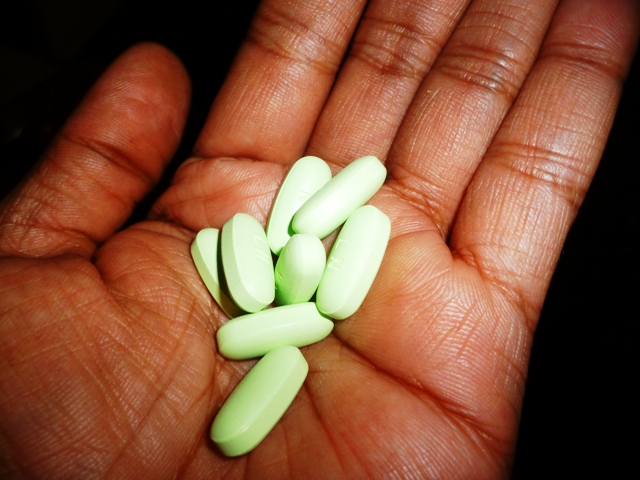
It’s far too early in the process to know if my new medication is helping or not, but I am hopeful.  I know that I am not a failure – not to God or to myself or to those who love me.  I am comforted in knowing that healing means knowing the truth about myself.  I am sensitive and strong at the same time.  I am both worried and determined.  I am taking Zoloft and I am a successful woman.  I can only get where I’m going by opening my fists.