Nice Guys Can Be Rapists Too

**TW: assault, abuse**

“I have friends who are women.”

It felt like Brett Kavanaugh repeated this over and over throughout his hearing.  This statement is the patriarchal equivalent of “I have black friends” – a phrase often used by white people to prove that their actions couldn’t possibly be racist because they know a black person.  Knowing black people does not mean you don’t say and do racist things.  And knowing women does not mean you aren’t a part of the patriarchy.  In fact, it’s entirely irrelevant.  Not everyone has black friends (though that blows my mind because it’s 2018).  But, everyone knows women.  Everyone has a mother.  By nature of existing you have come into being through the body of a woman.  Yet, there are rapists, misogynists, and abusers everywhere.  Knowing women means nothing.  The recently arrested East Area Rapist/Golden State Killer was living with his daughter when he was arrested.  Bill Cosby has a wife and daughters.  Brett Kavanaugh has a wife and daughters.  This does not exempt them from being perpetrators.

What’s more, being a “nice guy” does not mean you have never assaulted anyone.  Bill Cosby was the apple of America’s eye for decades.  He was viewed as a wholesome, all-American, family man.  But it turns out, there was a lot of abuse happening under that facade.  Throughout Kavanaugh’s hearing, he pointed to letters and statements from friends that stated he was a good person, a nice guy, a good friend.  These things are not mutually exclusive to sexual assault.  I know because my own story feels eerily similar.

The person who assaulted me is a “nice guy”.  He cares about social justice and even claims to be a feminist.  No one who knows him would point to him as being a violent or mean person.  I’m sure he could get 65 people to sign a letter stating the he’s a good person, just like Kavanaugh.  I myself was blinded by his good-guy persona, so much so that I continued to see him for several months after my assault because I didn’t realize what had happened to me.  It seemed impossible that a guy like him could do the very thing that he spoke out against.  He went to the women’s march.  He fights for the marginalized.  How could he have possibly done something so against what he claims to be his moral code?

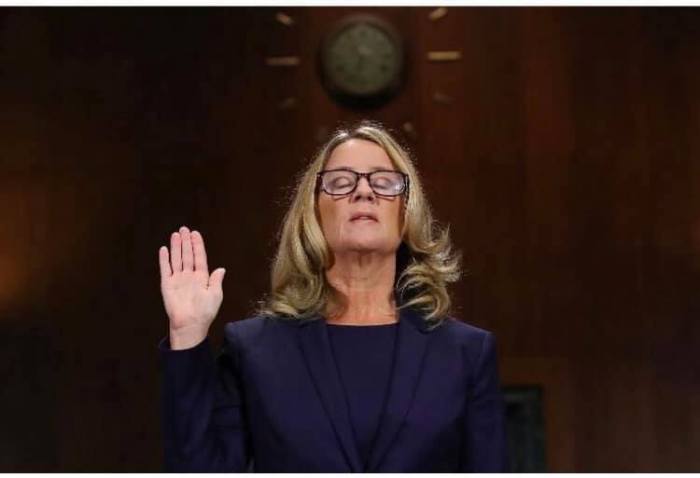
I dont’ know the answer to that question, but I do that Dr. Ford’s story feels all to familiar.  If I were in her position, I’m sure people would be saying things about my perpetrator that are similar to the things being said by the committee and others about Kavanaugh.  He has a mother.  He has a wife.  He has a sister.  He has a daughter.  Witnesses claim they have never seen him act like this before.  The reality is that these things don’t matter because they don’t prevent assault.  Having women friends that you talked to on the phone in high school and never assaulted does not mean that you never assaulted anyone else.  No one assaults every woman in their life.  Just because there are women who have not seen this side of him does not mean that side doesn’t exist.  Nice guys can be rapists too.


Legend

This is a portion of the piece Legend, which is published in full in the collection Georgia’s Emerging Writers: An Anthology of Nonfiction.  The collection can be purchased here or on Amazon.

I am a child, maybe six. Alone, but not lonely. I walk without direction along the suburban street in front of my house. There are railroad ties that my dad put in our yard to prevent drivers from cutting the corner and leaving tire tracks in our grass and a wooden fence, gradually rotting. Bradford pear trees and small cacti neatly circle around the perimeter of the yard. I watch my cat climb the tree right next to the house, hoping she doesn’t get stuck.

I breathe in the magnolia air and run across the yard to a strip of woods that separates our yard from the neighbors’. Rocks the size of cantaloupes line the patch of woods, and I like to hide things under them – pieces of paper with secret messages or tiny toys. My favorite spot is a small tree that grows strangely out to the side, stretching toward the sunlight and making a chair with its trunk. I sit on it and uncover my favorite rock, grey-blue with sharp edges, under which I keep one of my mother’s old lockets.

I look out and survey the world I’ve created for myself. I am safe here with the trees and the rocks and the Southern air. I am safe from the grief that fills our house. I am safe from the stress of my father as he tries to balance raising a daughter and working in an office. I am safe from the emptiness of a house without a mother. In my imaginary world with trees and rocks and railroad ties, the truth is avoidable. In my game, I am a mother, caring for the trees and for the tiny objects under rocks.

In adulthood, learning how to cope with my lack of knowledge about my biological mother has progressed little beyond my childhood games. If anything, I’ve grown further away from being able to remember her. In my consistent efforts over the past 22 years to count my memories of my mother, I can count only five. Other images of her float around, cross-contaminating my memories to form legends of a woman I never really knew. There are the stories that relatives and friends tell decade after decade – the story of my premature birth, the story of how she pulled out a chunk of her hair during chemotherapy and made a quippy joke to her doctors, the time we all went to Disney World when I was two – but none of these are my own memories. They are stories for which I created images after multiple retellings. More importantly, they are not the entire story. They are the high points, the greatest hits, the grain separated from the chaff. No one tells me about the mundane things – how she brushed her teeth, what she ate for breakfast, how she pronounced the word pecan – much less the terrible things. When someone dies, everyone is afraid to mention the moments that they gave up or the times they were frustrated with people they loved. We conveniently forget that they were a whole person with flaws and, instead, create a legend.

These unintended heroes give us the same hope that any legend gives: the story of a martyr who was kind through her suffering, benevolent to a fault, selfless in every circumstance. However, legends are not people; they are ideas. And my mother was not an idea; she was a person, and I cannot know her unless I know all of her stories. So, I will start with the ones I remember…

To read the rest of this piece, visit the Z Publishing website to purchase the collection.

Why leave the closet?

It’s been a long few weeks, y’all.  Since coming out, I’ve gone to Wild Goose Festival (still haven’t written about that adventure), hosted my childhood best friend’s bachelorette party, moved to a new house, and sprained my ankle.  It’s been a time.  But through all that, lurking in the back of my mind was how to make sense of why I felt like it was important for me to come out.

I’ve been asked this questions several times, sometimes from people who are not affirming of the LGBTQ community and other times from people who are supportive and trying to get to know me better.  At first, I wasn’t sure how to answer.  I could only explain my coming out by saying that I knew I had to.  I couldn’t resist it anymore.  A part of me that had been beaten, oppressed, locked away, and shamed for so long finally had a chance to creep out into the light, and I was tired of telling it no.  After years of therapy and self-reflection, I finally developed the courage to say “hey, this is who I am.”  And once I fully embraced that thought, there was nothing I could do to stop it anymore.  For me, coming out as bi has nothing to do with polyamory (although plenty of people of all different sexualities are and find it fulfilling) or leaving my current relationship.  I am happy with a straight man.  But I am still a queer person, and I’m tired of being erased.

Bi erasure is a problem even within the queer community.  I constantly hear people say that bi people are just gays who haven’t come all the way out yet.  While that can sometimes be the case, bisexuality is also it’s own legitimate identity.  When I’m dating a man, I’m not “straight.”  If I were dating a woman, I wouldn’t be a lesbian.  If I were dating a trans person, my sexual identity would not depend on how they identified their gender.  No matter who I am with, I am still bi.  My identity is my own identity, regardless of who my partner is.  I do not want half of who I am to be erased simply because of who I’m with.

But it’s more than that.  It’s not just about me.

In case you’re not aware, the United Methodist Church is currently in the middle of a years-long debate about human sexuality.  For the past several General Conferences (held every four years – lining up with presidential election years in the US), voting on issues of human sexuality has resulted in arguments, protests, tears, and an inability to understand The Other.  Because of this current debate, I knew that I was putting myself at risk by coming out and simultaneously being a Methodist clergyperson.  I haven’t yet received any feedback from the church, but, technically, I could have my clergy credentials removed.  LGBTQ people are not allowed to be clergy in the Methodist church, which is a primary issue up for debate at all of these conferences.

The people in the congregations I’ve served need to know that someone among them is queer.  So many people who believe damaging things about homosexuality think that they don’t know anyone who’s queer.  It’s easy to have hurtful opinions about a group of people that you don’t actually know.  It’s much harder to look a member of that group in the face and share those opinions, especially if that person is a member of your faith community.  So, by coming out, I hope to also start conversations with people who don’t know where they stand and also with people who do know where they stand and want to have conversation about LGBTQ issues.  So if you have questions, let’s chat.

I want everyone to know who I am, even if it means losing a few relationships with those who refuse to accept me.  In this politically horrendous time, I cannot be silent any longer.  In a time when Christianity is seen as an exclusionary religion, I want to invite people on the margins in by showing them that I am on the margins too.  Being queer means so many different diverse things, just like the rainbow we wave, and I’m grateful to finally be a public member of this community.  So, let’s allow all the colors to be visible and make the world a little brighter with how fabulous we are.


GUEST POST: Who the heck am I, anyway?

I recently had the pleasure of getting to know Chrisie Reeves-Pendergrass through the magic of Twitter.  A friend of mine asked if anyone she knew was doing work around #metoo and #churchtoo, and I immediately responded that I had done some writing on #metoo.  She connected me to Chrisie, who is doing some wonderful truth-telling, empowering work.  Chrisie and I immediately connected over being type 1’s on the Enneagram as well as our spirit animal, Leslie Knope.  We immediately decided to guest blog for each other.  You can find my post on her blog here.  Enjoy these words from Chrisie on the paradoxes of identity, realizing trauma, and self-discovery.

Growing up I thought that I would have life figured out by age 30. I would have a job, family, and know who I am and who I want to be. As I approach yet another birthday in my thirties, I now think that who I am and who I want to be is a fluid concept. Recently I have been reflecting on Psalm 139 and realized that I don’t really know myself as well as God does. In fact, in the last few months I haven’t been sure I even know myself at all. I find myself in a similar time of rebirth and discovery that I experienced in my early 20s.

I’m a 31-year-old pastor, mother, survivor, wife, advocate, and redhead. But am I more than those labels? Less? Confused? Lost? Can I accept the aspects of myself that I love and ignore the parts that I dislike or make me feel vulnerable? Is this how I want God to love me?

In the winter I discerned that God was calling me to embrace parts of my person that I have hid or shied away from. Most of life I have felt confused by who I am. I seem like mismatched pieces, incongruent and paradoxical parts smashed into one body. I love Star Wars but hate science fiction and fantasy, with the exception of Lord of the Rings and Harry Potter. I can ride roller coasters all day, but I am afraid of fast cars. I am an extreme extrovert, but I can read quietly for days at a time. I am ethically against divorce, but I have been divorced. I love pretty things, but I hate clothes shopping. I’m an incredibly strong and independent woman, but I ask my husband to fill up my gas tank.

I thought I had myself all figured out prior to this year and prided myself on my self-awareness and introspection. And maybe I did know myself, and simply grew and changed in the last year. It’s entirely possible as I had a baby and changed churches and roles from associate to solo pastor. God’s sudden call for me to expand my ministry and identity felt like I lost myself at best, a betrayal by God at worst. I argued with God and cried in the middle of the night. I didn’t know who I was outside of my call to ministry and I narrowly defined what ministry was. God did not. I wasn’t ashamed of my past, but I didn’t really share it for a variety of reasons. I didn’t want people to look at me with pity, I hated how people would see me differently knowing I had been a ‘victim’ of domestic violence and sexual assault, and I never wanted to hear “God is going to do amazing things with you, because of your past.” Why that statement made me crazy is a whole other blog post for another day, but I separated my ministry from my story, and I wanted it that way.

God knows every thought and every part of who we are. I believe that God is calling us as disciples to be on a constant journey to know ourselves. The good and the bad. The good so we can embrace it and the bad so that God can redeem it. A strange thing happened with I started to write and reclaim my WHOLE story. I felt more like myself than I had in a very long time. I found myself, when I didn’t even know that I had been missing. I found that if I went too many days without writing I felt anxious and separated from the Divine. Once I started rediscovering myself, I couldn’t stop. I got new glasses, launched a website, wrote a book, and dyed my red hair blonde. I joked that I was going through a quarter-life crisis, but I was lovingly reminded that I’m a little too old for it to be a quarter-life crisis.

In my self-discovery, I rediscovered the beauty of God. I fell in love with my Creator in a deeper way, because I had a deeper understanding of my own heart and life and who I am created to be. God already knows all that I am, have been, will be, and could be. The beautiful and the ugly. In my teens I thought I would know who I was in my 30s and in my 30s, I now believe that I will never fully know myself, and that’s a good thing, because I am evolving and learning. The good news is that God knows and loves me, even when I don’t know who I am, because God is the I Am.

About Chrisie Reeves-Pendergrass:

Chrisie grew up in Eastern New Mexico and West Texas and is the daughter of a minister and schoolteacher. She went to college at the University of Texas at El Paso and studied Clinical Health Psychology and English and American Literature, where she graduated in 2011. Throughout her college years, Chrisie worked at various churches as and served as everything from an intern to a youth director to a children’s director.

Chrisie then attended Duke Divinity School from 2011-2014 where she received her Master’s of Divinity. She is currently an ordained elder in the United Methodist Church serving in the South Carolina Annual Conference as the pastor at Gilbert United Methodist Church. In 2012 she married Rev. Weston Pendergrass, who is also a United Methodist minister in South Carolina. They adopted a beautiful and curious baby boy in 2016.

Chrisie is a survivor of domestic violence and sexual assault and suffered from symptoms of Post Traumatic Stress Disorder during her seminary career. She is now a fierce advocate for women and women’s issues in the church and understanding of mental health and better mental health care available for all persons. Chrisie Reeves-Pendergrass is available to come and speak at churches and events on these topics.


I’m Here and I’m Queer: Coming Out

I’m bisexual.

I first knew this about myself in high school.  I talked to a few close friends about it.  I confided in a queer history teacher at school for advice.  My short lived exploration was met with so much resistance, though, both at school and at church, that I abandoned my questions about my sexuality entirely for the next decade

My high school refused to allow a Gay-Straight Alliance.  Instead, we would meet in secret in the school theater at lunch.  One of the few out lesbians in school came to her car after school one day to find the word “dyke” carved into the driver’s side door.  The only trans person at school was forced to use the bathroom at the nurse’s office because there were no gender neutral bathrooms.  People laughed and talked behind their back.  Things have changed greatly at my high school, which is now much more supportive of LGBTQ students, but when I was there, it was painful.  My youth group was also a place of difficulty.  Whenever we explored LGBTQ+ issues, the teaching was that homosexuality was sinful and against God’s will.  A combination of all of these hardships shoved me decidedly back into the closet for nearly ten years.  I thought I had to choose between being a Christian and being bisexual, so I choose being a Christian.

In many ways, it was easy to pass as straight.  I was not being entirely untrue to myself by dating only men.  I liked cisgender men.  I didn’t like only cisgender men.  But for a long time, it was easy enough to pretend.  I positioned myself as a straight ally.  I was believable.  I’m high-femme (which, if that term is unfamiliar, means I present my gender as very feminine – wearing dresses, having long hair, and wearing make-up) and have had several long-term relationships with men.  Even some of my gay friends assumed I was straight.  I was good at hiding.

It wasn’t until I got to seminary that things began to change.  Suddenly, I was confronted with queer people who were also faithful Christians.  I had never met anyone who was able to live fully into both of these parts of themself.  I didn’t know it was possible.  Christianity and queerness had always been presented to me as mutually exclusive lifestyles.  You could be one, but not the other.  During my time at seminary, though, I realized that I could faithfully be both.  At first, I didn’t think this would mean coming out.  I thought it just meant being honest with myself.  That, in itself, was a big step.  Because of my experiences as a teenager, I thought my bisexuality was silly and childish.  It had always been discussed as something I would grow out of once I became a more insightful adult.

Meeting other queer people who continued to explore their sexualities and gender expressions opened my eyes to the fact that I could be a serious, ambitious adult and faith leader who was also bisexual.  I didn’t have to leave that part of myself behind.   It wasn’t silly or stupid or shameful.  To the contrary, in order to fully mature as a person, I needed to embrace who I really was.  Once I realized that Christianity did not have to be an obstacle to my coming out process,  the reasons for staying in the closet thinned. I now know that it is more faithful for me to be honest with myself and others than to lie about who I am.

Coming out to my family was another significant obstacle in my coming out process. My parents are loving and caring people, but we don’t always see eye to eye politically.  I know that they love me deeply, but I was afraid that they wouldn’t be supportive.  Last month, though, I developed the courage to write them an email.  I spent weeks drafting it and sent it to a friend for feedback.  After weeks of delaying and thinking, I finally took a deep breath and hit send.  It was one of the scariest things I’ve ever done.  However, it turned out that my anxiety around being honest with them wasn’t warranted.  My parents told me that, of course, they love me no matter what.  They had questions and concerns, but they listened to my answers patiently.  I believe coming out to my parents will be an ongoing process, but I’m grateful for their acceptance and curiosity.

Now that I’ve been honest with myself, my faith, and my family, I am tired of hiding.  I spent most of the month of June desiring to be a full part of the LGBTQ community so I could wear rainbows and wave flags with my fellow queers.  I know that it’s not that simple, and that the queer community has it’s own set of challenges to face, but after ten years of hiding, I want to celebrate who I am.  I’m ready to bravely stand up to those who say I can’t do things and show them that I’m just as worthy.  I’m ready to use my privilege as a white queer person in a straight-passing relationship to teach others about what it means to be queer.  I’m ready to be my full self.  While this will no doubt be an evolving journey for me, I’m glad to have my community in it with me.  I can’t wait to continue to share about who I am and where I’m going.

Happy Belated Pride, queens.  Let’s do this.

For more information:  A few months ago a did an anonymous interview on a friend’s blog about being a queer, closeted Christian.  I answer questions about my sexuality, my faith, and being a queer pastor.  Read it here.

Making a Home

I hate moving.  I don’t like change.  I like routines, stability, consistency.  I wish I could stay in my little shoebox apartment, but my rent is going up and I can’t afford it.  Within the next month, I have no choice but to move to a new home.

The things I’m going to miss about my current living space don’t exactly make sense.  I’m not going to miss the occassional roaches or millipedes.  I won’t miss not having a dishwasher.  I also won’t miss the lack of central heating and air.  Most of all, I’ll enjoy not having my power go out every time it storms (thanks, Candler Park).  But I will miss the four mile loop I run each day on the Beltline.  I’ll miss the people I see every morning on my walk to the train – a family with two elementary aged kids walking to school, a family that got a new puppy several months ago that has now grown into a full sized dog, a girl who rides her bike to school and once told me she liked my shirt.  I’ll miss the Kroger where I shop.  I’ll miss my neighbors.

Recently, I got teary eyed just thinking about moving, and I was embarrassed at my emotions.  I’ve only lived in this apartment for two years, and I haven’t always loved it.  It has its kinks.  There are times I wished I could move out.  I’m also not moving far.  I’m staying in the same city, so the area I live in is one I could easily visit any time.  Even so, I’ve grown unavoidably nostalgic about leaving my little corner of the city.

Every day at work, I’m baffled by the ability of humans to make a home in any situation.  I see guests with systems of suitcases that hold their belongings.  I see others with a daily routine – washing their face in our sink, putting on perfume, going to a prayer meeting.  When I pass the areas where our guests live, I bear witness to encampments made of cardboard, tarps, and blankets.  Some use old cardboard and milk crates to make a night stand.  Others use found wooden pallets as a mattress.  Humans do not deserve to be cast aside like this, but I cannot help admiring their ability to make a home in the worst of circumstances.

We desire to have a space that is ours, a space of comfort, organization, routine, and safety.  This desire is so strong that it grants us the ability to make even the worst of conditions into the best home we can manage.

I am privileged.  I have never experienced homelessness or even come close, so in this way my moving woes seem small.  However, I think we all experience a sense of mourning when we have to leave what is familiar and safe in order to make a new nest elsewhere.  I love my little nest, but I have made new ones before.  In my adult life, I moved to college, lived in Costa Rica, spent summers outside of Ashville, moved to Charlotte, and finally landed in Atlanta.  While I was not used to moving as a child, having only moved once with my family before heading to college, I have had my share of transitions over the past ten years.  I know that I will make a new home where I land, but that doesn’t make the uprooting any easier.  For now, I’ll smile broadly as I pass strangers on their way to the bus stop who will never know how much I treasure our silent relationship.

He Doesn’t Hit You But…

*tw: emotional abuse*

EDIT: The image for this post features a man of color and a white woman.  This image in no way indicates a correlation between abuse and race.  The featured image was chosen for other reasons by the author and should not be taken to imply that men of color are more likely to abuse their partners.

Several years ago, a popular hashtag cropped up that provided a space for people who had endured abusive relationships to share about their experiences.  Survivors of emotional and verbal abuse, primarily women, took to Twitter to increase visibility for the types of abuse they had endured.  “#HeDoesntHitYouBut his words create bruises just as punches would.”  “#HeDoesntHitYouBut treats you like property.”  “#HeDoesntHitYouBut he uses breaking up with you as a constant threat.”

At the time, I didn’t say much about it, but I sat back and watched friends and strangers validate my own experiences.  It was through this hashtag that I realized the truth of things I had experienced.

In the beginning, he was charming.  I was young and still figuring out who I was.  I was blown away by the fact that a boy I had just met was interested in me.  I was pretty dorky in high school and was still growing accustomed to the fact that men might pay attention to me.  I was naive and had unrealistic expectations of what romance should look like.  We fell in love over a summer, and it wasn’t until we entered our first few months of long distance that things started to shift.

I would call him and he wouldn’t answer.  While I knew I couldn’t expect him to be available every time I called, I would sometimes go three or four days without a call or text from him.  I would start to get worried and would contact one of his friends or roommates in a desperate attempt to make sure he was okay.  They were never very helpful, and eventually he would reach back out to me.  He would give some sort of flimsy excuse about why he had been off the grid, and I would blindly accept his explanation.  I wanted him to think I was “chill” and not clingy, and grilling him on where he had been seemed like a definitive way to drive him away.  He would disappear like this intermittently during our first year of long distance.  Eventually, it stopped.  Even after years of being with him, though, I never got a clear answer on his disappearances.

His flightiness was only the beginning.  Eventually, he tried to control what I wore and who I spent time with.  I wasn’t allowed to wear leggings or yoga pants outside my house because other men might look at me.  If he saw a picture of me in work out pants on Facebook, he would call me and question me about whether I had worn them outside the house and why.  I wasn’t allowed to wear too much make up.  Sometimes, I wasn’t allowed to wear any make up.  I initially thought this was romantic.  I thought it was evidence that he thought I was naturally beautiful, and maybe that was true, but controlling what I put on my body was not the proper way to show me.

Arguing with him was impossible.  Sometimes I would bring up things that were bothering me about him or about our relationship.  He would always claim I was making it up or exaggerating.  He would say I was attacking him and turn my concern back onto me, claiming I was the one who was flawed.  We would never resolve the initial things I brought up and I would leave the conversation feeling like a terrible girlfriend.  There were times when these arguments would get heated.  I’m not an aggressive or angry person.  I very rarely yell or snap at people, but with him, I did.  Often over the phone, we would yell and I would hang up with him and throw my phone across the room in exasperation.

Things continued to worsen when I moved to a different city.  I made new friends that he had never met and that concerned him.  Any time I claimed to be alone studying with a male friend, he would be noticeably suspicious or even blatantly angry.  I wanted to spend time with the new friends I was making, but if I told him I wanted to get together with friends instead of visiting him, he would always get angry or at least annoyed.

Perhaps the most disturbing part of this relationship was that he cut me off from my family.  My parents never liked him, which, obviously, as an 18 year old, made me even more defiant.  However, he gradually convinced me that my parents weren’t the people I thought they were.  By the end of the relationship there was a noticeable distance between my parents and myself.  He had convinced me, over a period of years, to be completely on his side, mistrusting my family.  He manipulated me into believing that he knew what was best for me better than my parents did, so I trusted the things that he told me about them.  It was a vicious cycle.

He was never physically violent with me, and I’m grateful for that.  There were times when I worried about it, especially when he got angry.  Still, I know that plenty of people experience violence and abuse in relationships much more severe that what I catalog here.  But if you’ve experienced this sort of gaslighting and manipulation, I want you to know that you’re not alone.  If you are reading this and wondering about the state of your own relationship, don’t hesitate to reach out to me or someone you trust.  Because this isn’t just about me.  It’s about equipping others to leave unhealthy relationships, and healing in the aftermath. It’s about recognizing the signs before it’s too late. It’s about teaching (not exclusively but especially) our men deeper empathy and compassion.  Even the strongest among us can be emotionally abused, and the first step toward stopping it is realizing that it’s happening.

why did you stay?

why did you stay?

He grabbed
my waist
and told me
he liked my lip ring,
and then kissed it.

I said,
“no, please,
just come lay with me.”
I wore a white comforter,
and we held hands
on the couch
at 6:30
on a Sunday morning.

A train when by
the window
and he ordered me
around the bedroom
in a way that
I mistook for
romance.

He left
granola out on the table
for me,
and honey.
“You’ve overcome
so much,”
he said.

He held
me in his lap
and I touched
his sweaty neck
while he exhaled
and told me his secrets.

He told me
my writing
reminded him of
a certain British philosopher.

I misunderstood,
“I know we
should
let this go, but I
still
want to kiss
you.”

I saw a
pink hair tie
on his nightstand
but
excused it for
a rubberband.

The man before him
told me that I couldn’t
wear tight pants
or make up
because other men
would look at me,
so this kind of violence
seemed more romantic.

I am used to
lies,
and his, at least, came with
honey on his hands when
he held me down,
sticky sweetness on his lips when
he said,

“No wonder this is so hard for you.”

I Am Afraid of Men

TW: sexual assault, emotional abuse

I can’t say when it all started, exactly.  When I’m on the train, when I’m walking down the sidewalk, when I’m in a store – I am always on guard.  I put on my “resting bitch face” and my sunglasses and my headphones so no one will bother me.  I feel much safer when I’m surrounded by only women.  This doesn’t mean I hate men.  I love my father, I love my partner, I love my male friends.  I am not afraid of them because I know them.  They have proven to me that they are trustworthy.  But sometimes, even the men who find their way into my inner circle are not trustworthy.

I was emotionally abused for years by a previous partner.  He told me what I could or couldn’t wear.  He expressed an irrational, jealous rage if I ever spent time alone with a male friend.  When I went to seminary and developed into a budding feminist, he told me my views were wrong.  He yelled at me for taking naps when I was tired instead of spending time with him.  He used guilt to control me.  At first, though, he was charming.  But after a few months of sweeping me off my feet, he became distant and inaccessible while also needing to know everything about what I was doing so he could keep tabs on me.  Our relationship went through cycles of growth, but he always returned to his controlling patterns.  He taught me that relationship does not mean I should not be afraid.

I was sexually assaulted by a friend.  I’ve written about this experience before, but it’s important to emphasize that this didn’t happen to me in a dark, damp alleyway with a scruffy stranger.  Like many women, I was assaulted by someone I knew.  We had a budding friendship and I was developing feelings for him, but he still took advantage of me when I was vulnerable.  He taught me that friendship does not mean I should not be afraid.

If I haven’t even been able to trust the men closest to me, it is not wonder that I feel afraid to walk down the street.  I feel my body tense and my heart race each time I pass a man on the sidewalk, bracing myself for catcalling.  When I get on the train, I look for a seat next to a woman.  When I enter a public restroom, I look around to make sure there are no men lurking in the corners, waiting for an unsuspecting woman to enter.

I work at a social service agency, and we primarily serve men.  Whenever I have to walk through our lobby, with rows of men waiting to receive services, I clench my jaw and ball up my fists.  I worry about being grabbed.  Instead, I usually get comments about my body or asked for my name followed by a “mmm” or a “damn”.  While we are currently working to improve what safety looks like in our organization, for the reasons I mentioned as well as several others, it wasn’t until this week that I came to the realization that I am constantly afraid.  I am afraid in my workplace.  I am afraid on public transit.  I am afraid walking to my apartment, even in the daytime.  I often create scenarios in my head so that I have a plan prepared if something bad were to happen.

All of this fear is exhausting.  Being in a spaces with only female-identifying individuals is like letting out a breath I’ve been holding in.  I don’t worry about my body.  I don’t worry that my smile will be misinterpreted.  I want to feel this way all the time.  I don’t want to hold all this fear in my body.  But until men can prove to me that they are not a threat, I continue to clench my teeth and ball up my fists.  We are learning every day about more reasons to fear men.  For the past few months, it seems like every morning there is a new name to add to the list of famous sexual harassers.  It’s hard to face a world of men when I hold my own sexual trauma and constantly hear about the trauma of others.

But I don’t want to feel this way.  We don’t want to feel this way.  Women do not want to be afraid all the time.  So, men, prove us wrong.  Be kind.  Be vulnerable.  Show sensitivity.  Do not be defensive.  Open yourself to the possibility that you don’t know everything.  Listen to what we have to say.  Do not assume we owe you anything.  Do not say something to a woman you don’t know that you wouldn’t say to a man.  Stop catcalling.  Make sure your coworkers are being fairly compensated.  Be confident enough in your sense of self that you do not see a strong woman as a competitor to be squashed.  Be our partners, not our hunters.

Disclaimer: This piece deals with gender in a binary way.  I apologize to those who are trans, genderqueer, and nonbinary.  You have a place in this conversation too, but I cannot speak to your experiences of gender, so I have not included them here.  Please speak your own truths to better inform all of us.

New York

“I came here to see it…”
they say she is a city full of
all those good things
opportunity
success
adventure
love

bright lights
mean I can learn to
be bright again too

“…with new eyes…”
like reading your same favorite book
the same time again each year
and realizing how different you are
each time you encounter it
I am a new creature now
in a way I wasn’t
last time I saw her
this time I need this wildness
my body craves her streets
her crowded subways
her tall towers packed together
her old and new juxtaposed

“…and feel it.”
she taught me that I can still do this
that my tenacity is still intact
that I can move beyond merely enduring
that I can get drunk on wine
with my parents and take a
late night walk through the West Village
that I can write my phone number
on a napkin and slide it across
the bar to a British man
that I can take a cab through
the city alone and confidently
get where I’m going

“It’s up to you, New York.”
she was the climax
of a summer of adventures
to remember where my core is
among all this debris
because New York knows
what it’s like to try to
find yourself again
among debris
and rise from it in the most
poetic and heart wrenching of ways